 AI Paper Summarizer
Understanding the Forking Trap: A Real-World Technical Challenge
WebRTC at Meta is integral for real-time communications across platforms like Messenger and Instagram. However, maintaining a fork of such a large open-source project within our monorepo posed significant challenges. Over time, diverging from the original WebRTC repository cut us off from community upgrades and improvements, leading to a stagnant infrastructure.
Achieving Breakthrough: The Need for Modernization
Realizing the inefficiencies of our forked implementation, we embarked on a multiyear migration. By transitioning over 50 use cases to a modular system leveraging the latest upstream WebRTC, we avoided falling victim to the 'forking trap.' This modernization allowed us to integrate new community updates seamlessly while maintaining our proprietary optimizations.
Technical Solution: Dual-Stack Architecture and Shim Layer
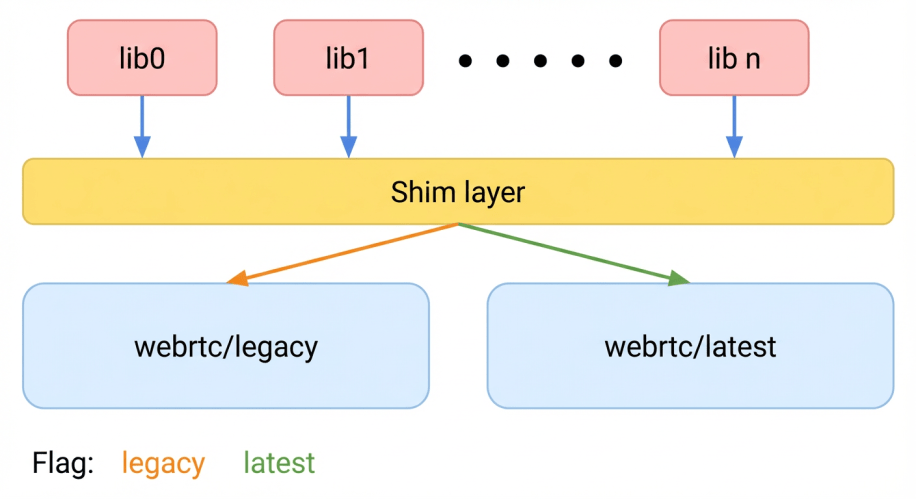
Dual-Stack Architecture: We implemented a shim layer to run both legacy and latest versions of WebRTC. This intermediary library enables A/B testing by dispatching calls to the appropriate version based on runtime configuration, minimizing risk during upgrades.
Resolving Symbol Collisions: Automated renamespacing ensured unique symbols for each WebRTC version, while macros and shared modules were optimized to avoid conflicts and reduce binary size.
Backwards Compatibility: Through namespace imports, existing code remained functional, allowing a smooth transition without disrupting ongoing operations.
Addressing Core FAQs
- How did Meta overcome the limitations of a monorepo? By developing a shim layer and maintaining parallel WebRTC versions, we managed continuous integration with upstream code without sacrificing proprietary customizations.
- What are the benefits of this solution? The dual-stack approach enhanced performance, optimized binary size, and improved security by aligning with the latest community standards.
- How does Meta handle future upgrades? We maintain patches in a separate Git repository, enabling parallel development and simplifying submissions to the open-source community.
Moving Forward: Continuous Upgrades and Maintenance
Our new infrastructure allows us to stay up-to-date with the latest WebRTC releases, providing measurable improvements in performance and user engagement. Future initiatives include leveraging AI to automate conflict resolution and build health maintenance, ensuring seamless integration of future WebRTC updates.
Conclusion: A Blueprint for Modernization
This approach not only alleviates the technical debt associated with forking but also provides a blueprint for other organizations facing similar challenges. By staying adaptable and engaged with the open-source community, we ensure that our real-time communication infrastructure remains cutting-edge.
Acknowledgements
This transformative project was driven by a dedicated team of engineers: Dor Hen, Guy Hershenbaum, Jared Siskin, Liad Rubin, Tal Benesh, and Yosef Twaik, whose innovative solutions and perseverance were instrumental in overcoming unforeseen challenges.