
This blog goes through the differences between vector and relational databases. If you want to transition to vector databases, this blog will be worth your time.
What is a Vector Database?
Vector Databases are object stores that group similar objects.
If you input the words 'Apple', 'Pear', and 'Nuclear Weapons', you would expect 'Apple' and 'Pear' to be grouped and 'Nuclear Weapons' kept away.
Now if a person searched for 'Fruit', its vector representation would land close to Apple and Pear. A k-nearest search will then fetch acceptable results.
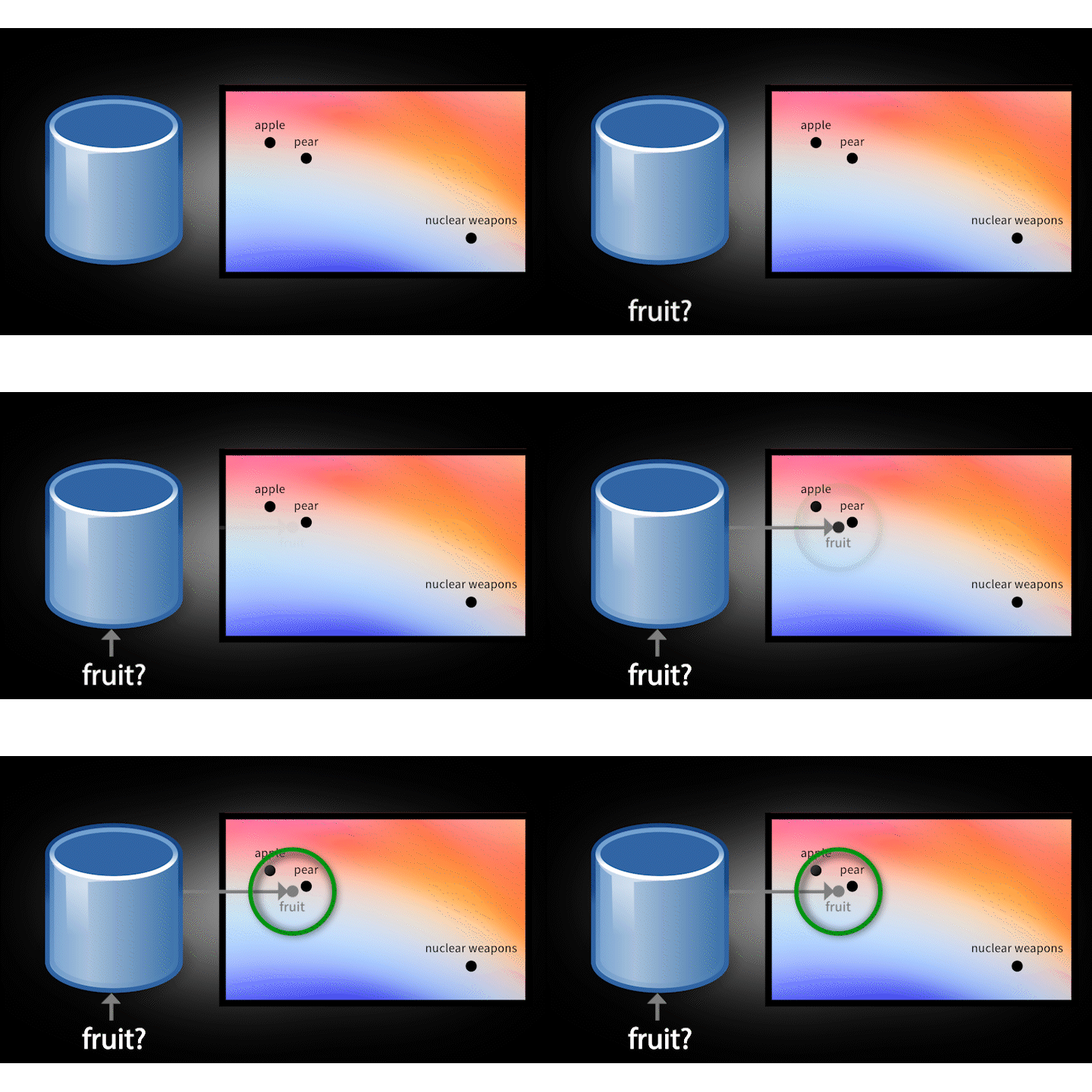
This property helps Vector Databases find similar objects quickly, a common use case for search and recommendation engines.
What is a relational database?
A relational database stores objects in rows and columns, like a spreadsheet.
Relational databases are general-purpose data stores. They store the original object data and use indexes to speed up query execution.
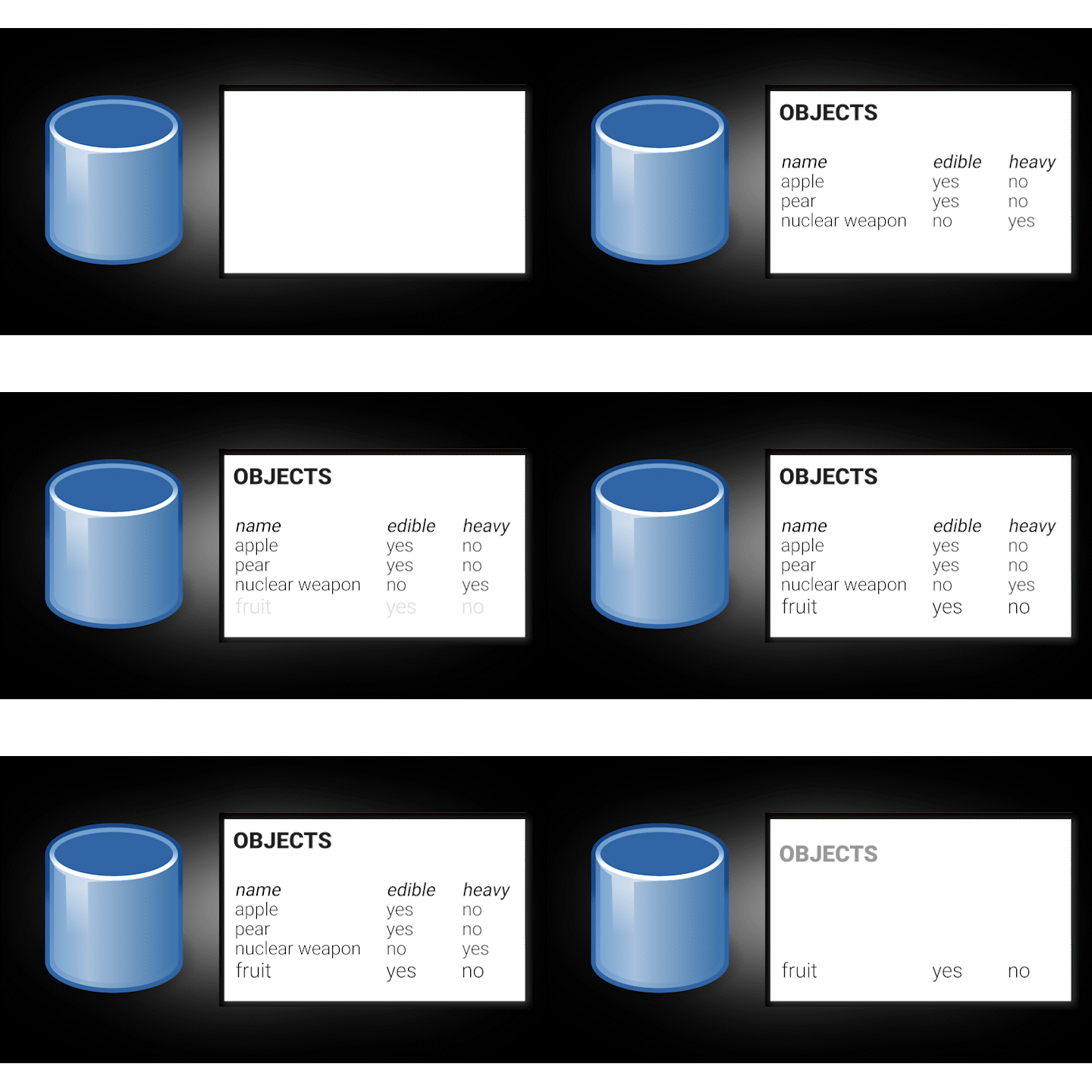
There is no implicit concept of "similarity" between objects. If an application wants to show similar objects to end-users, developers must write manual application-specific queries.
Differences between Vector and Relational databases
| Feature | Vector Databases | Relational Databases |
|---|---|---|
| Context or query intent understanding | Yes | No |
| Support for multimodal search | Yes | No |
| Ease of understanding | Specialized, harder to understand | General-purpose, easier to understand |
| Specific use case | Search, recommendations, generation | General-purpose data storage |
| Features like primary keys, ACID transactions, etc. | Limited or absent | Fully supported |
When should you use Vector Databases?
If you are building a search or recommendation engine with semantic capabilities (as compared to simple filters like in e-commerce websites), look into Vector Databases. Similarly, if you want to build a chat application or image generator, vector databases can improve the quality of generated results.
An example vector database is pgvector, used by many organizations to speed up searches. A serverless version of pgvector is offered by Neon.
For most use cases of storing and retrieving data, relational databases are simpler, faster, and easier to use.
To learn more about databases and software engineering, try our System Design Simplified course. Cheers!