 Aryan Oberoi
For the past few years, progress in artificial intelligence has largely followed a single direction: scale. Bigger models, more parameters, larger datasets, and increasingly expensive training runs became the dominant measure of advancement. The results were impressive, but they also created a growing disconnect. Our most capable models now live almost exclusively inside massive data centers, accessible through APIs, constrained by latency, cost, and centralized control.
As an AI researcher, this phase has been both exciting and unsustainable. We expanded the frontier of what models can do, but we also built systems that most developers and users can never fully own or run themselves.
A quieter shift is now underway. Based on current research trends, hardware trajectories, and economic pressure, 2026 is shaping up to be a major inflection point where progress is driven not just by bigger models, but by smaller, smarter, and far more efficient ones. In many real world applications, this shift will allow powerful models to run locally on consumer GPUs and even personal devices.
This is not a rejection of scale. It is a rebalancing.
Why Efficiency Is Becoming the New Benchmark in AI Research
For a long time, progress in AI was measured by a simple question: How big is the model?
Today, the question is changing to something far more practical:
How much can a model do with limited resources?
Researchers are now optimizing AI the same way engineers optimize cars or smartphones: better performance, lower cost, and less waste.
Several important ideas are driving this transition.
New Model Architectures Beyond Traditional Transformers
Transformers have powered nearly every major AI breakthrough of the last decade. But they are not perfect. They consume large amounts of memory, struggle with very long inputs, and scale inefficiently for some tasks.
New architectural ideas are addressing these issues.
State space models, such as Mamba-style architectures, process information more efficiently over long sequences. Optimized attention mechanisms like FlashAttention dramatically reduce memory usage and speed up inference.
The key takeaway for non-technical readers is this:
We are learning to build smarter engines, not just larger ones.
By 2026, many of these innovations will no longer be research experiments. They will be standard components inside everyday AI systems.
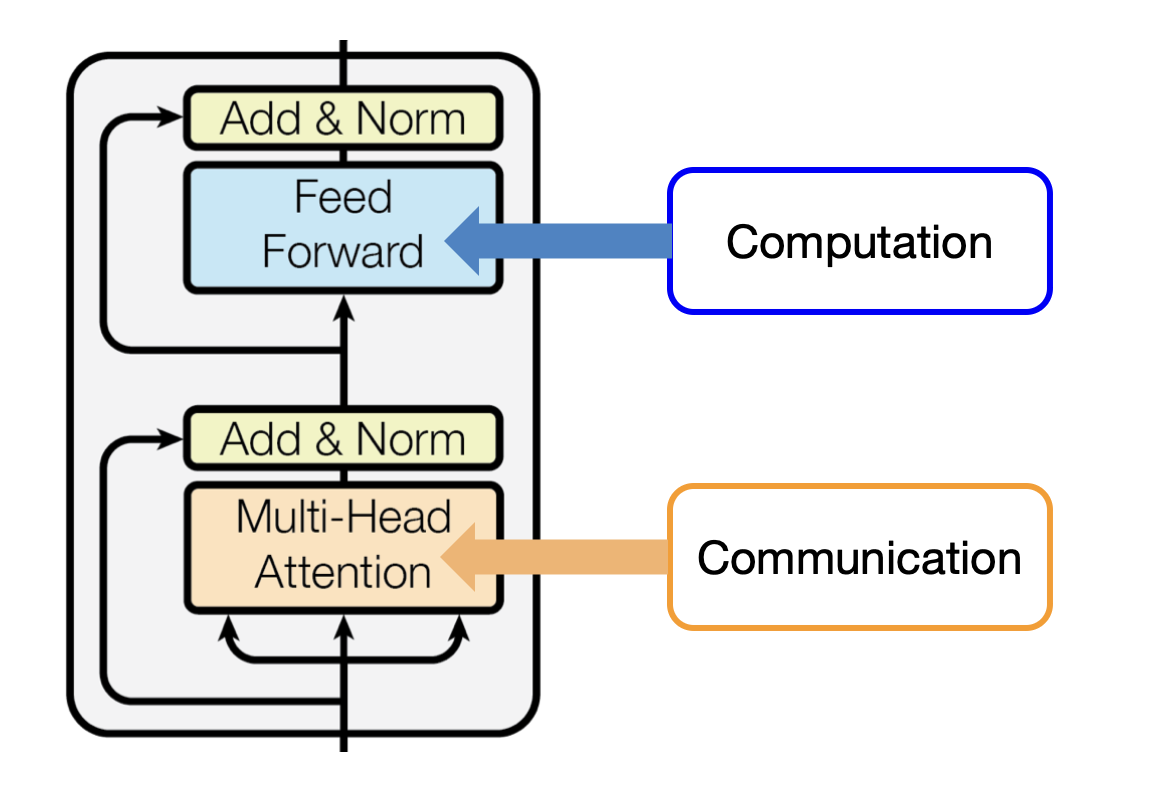
An illustration of Mamba Style Architecture in AI.
Pruning and Sparsity: Removing What the Model Does Not Need
Most large AI models are heavily overbuilt. They contain far more parameters than they actually use.
Pruning techniques remove unnecessary weights from a model, similar to trimming excess material from a machine without affecting how it functions. In many cases, 40 to 70 percent of a model can be removed while keeping nearly the same performance.
This means that instead of training massive models from scratch, we can train once, then compress and adapt models for specific needs.
For students, this mirrors a simple idea:
You do not need to memorize an entire textbook to solve a focused exam. You only need the relevant knowledge.
Quantization: Making Models Smaller Without Making Them Worse
Quantization reduces the numerical precision used by a model. Earlier systems used 16-bit or 32-bit numbers. Today, many models run effectively using just 4-bit precision.
Think of this as compressing a high-resolution image. When done carefully, the file becomes much smaller, but looks almost the same to the human eye.
Modern tools such as GPTQ and AWQ allow aggressive quantization with minimal quality loss. As a result, models with tens of billions of parameters can now run on a single high-end consumer GPU.
By 2026, this will feel normal rather than impressive.
Knowledge Distillation: Learning From Bigger Models
One of the most powerful ideas in modern AI is knowledge distillation.
Large frontier models act as teachers. Smaller models learn from their outputs, behavior, and reasoning patterns. The result is a compact model that retains much of the original capability at a fraction of the cost.
In many real-world applications, distilled models perform nearly as well as their massive counterparts, especially when trained for specific domains such as education, healthcare, finance, or coding.
This process is closing the gap between “best possible” AI and “practically useful” AI at an unprecedented rate.
How pruning, quantization, and distillation reduce model size while preserving performance.
Consumer Hardware Is Finally Catching Up
Software progress alone would not be enough without changes in hardware.
Over the past few years, consumer GPUs have crossed critical thresholds. Cards with 24 GB of VRAM are now widely available, and future generations are expected to push toward 32 GB or more.
At the same time, unified memory systems, particularly in Apple silicon devices, demonstrate alternative ways to run large models locally.
Memory bandwidth improvements and inference-focused optimizations matter more than raw compute. Faster response times and smoother interaction define usability far more than model size.
There is also growing momentum around dedicated inference hardware, suggesting a future where affordable AI-focused accelerators become common in personal machines.
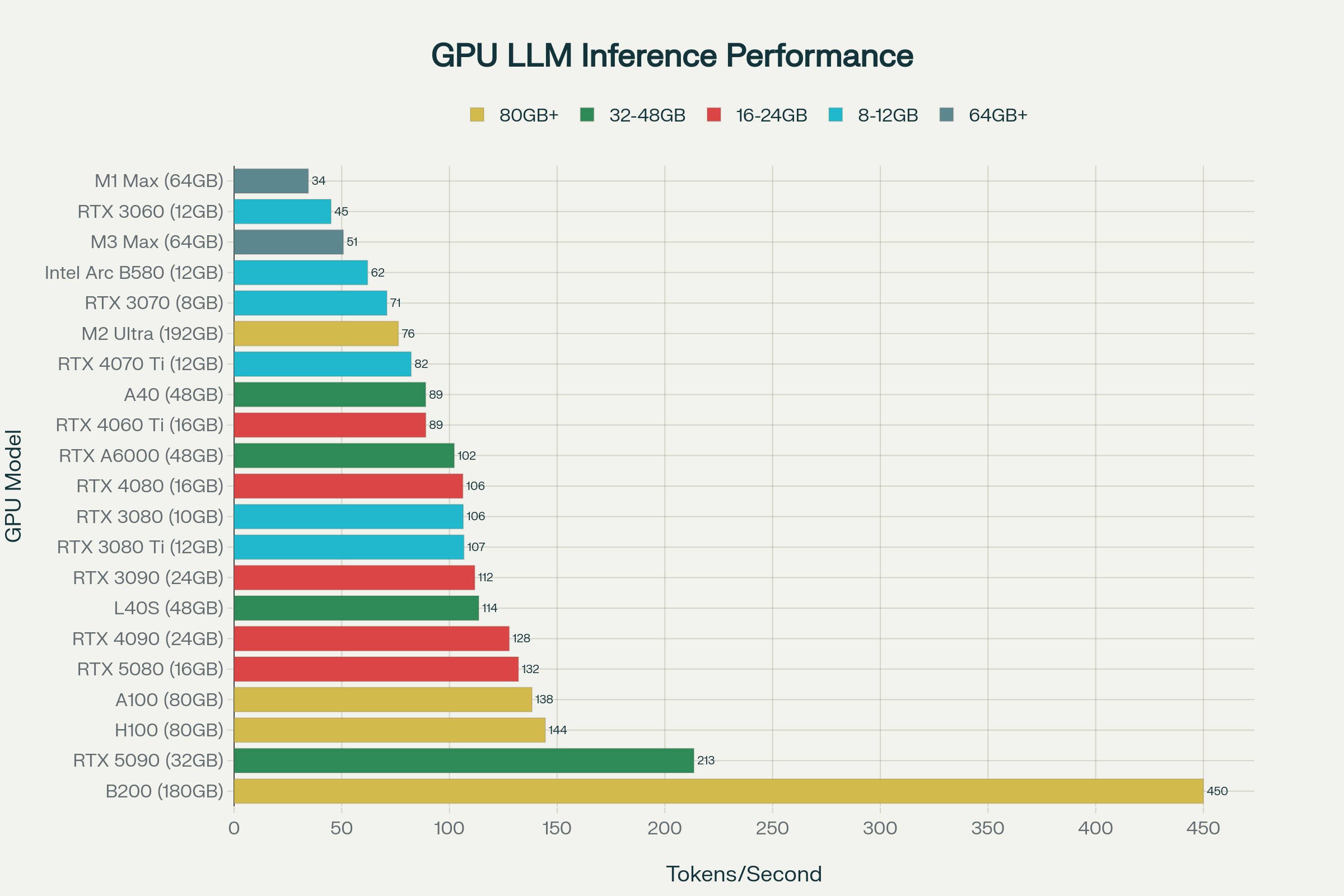
Modern consumer GPUs enabling powerful AI models to run locally.
Economic Reality Is Forcing the Shift
Even if researchers ignored efficiency, economics would not.
Running large models through centralized APIs is expensive. At scale, inference cost quickly outweighs training cost. For many organizations, this model is simply not sustainable.
Local and private execution offers clear advantages:
- Lower long-term cost
- Better data privacy
- Reduced latency
- Greater regulatory compliance
In fields like healthcare, finance, and law, centralized opaque systems are increasingly problematic.
A well-trained 7B or 13B parameter model, fine-tuned on domain-specific data and running locally, often outperforms much larger generic models for that task.
Techniques such as LoRA and QLoRA have democratized fine-tuning, allowing individuals and small teams to customize powerful AI without massive budgets.
This shift strongly favors smaller, efficient models.
What the AI Landscape May Look Like by 2026
If current trends continue, several patterns are likely to define the next phase of AI.
The “sweet spot” for practical models will move toward the 7B to 20B parameter range, optimized to run on consumer hardware.
Specialization will dominate. Instead of one massive general-purpose model, systems will rely on multiple smaller models, each optimized for a specific task.
For everyday use cases, these models will cross the threshold of being good enough. Beyond that point, the marginal gains from larger systems will not justify their cost.
On-device AI will become routine. Laptops, phones, and personal machines will host persistent assistants that work offline, respect privacy, and respond instantly.

The shift from centralized cloud AI to locally running models on personal devices.
Not the End of Big Models, but a Change in Their Role
Large frontier models are not disappearing. They remain essential for advancing research and discovering new capabilities.
Their role, however, is shifting.
They are becoming infrastructure, not interfaces. They teach, guide, and distill knowledge into smaller systems that people actually use day to day.
The story of 2026 will not be about how large AI models can grow.
It will be about how intelligently we compress them, how widely we distribute them, and how effectively we put them into the hands of individuals.
The center of gravity is moving away from the cloud and back toward personal machines and local control.
For students, builders, and researchers alike, this future is not just more practical.
It is far more exciting than simply constructing the next bigger black box.
Frequently asked questions
Will smaller models match cloud-based frontier models?
Not universally. Frontier models will still outperform in open-ended reasoning and research tasks. However, for task-specific, domain-focused applications, smaller local models often perform just as well or better.
AI running locally vs AI through API calls
The choice depends on factors such as privacy requirements, cost, latency, and the nature of your development process. Running AI locally offers greater control over data, improved privacy, and lower long-term costs, making it suitable for sensitive or offline use cases. API-based AI, on the other hand, is easier to integrate, requires less setup, and provides access to very large models, making it ideal for rapid development and scalable cloud-based applications.
How does this shift benefit students and beginners?
Students can run and experiment with real AI models on their own machines, learn faster, build projects independently, and gain hands-on experience without relying on costly cloud APIs.
Will on-device AI improve privacy?
Yes. Since data stays on the device, users have greater control, reduced data exposure, and better compliance with privacy and regulatory requirements.